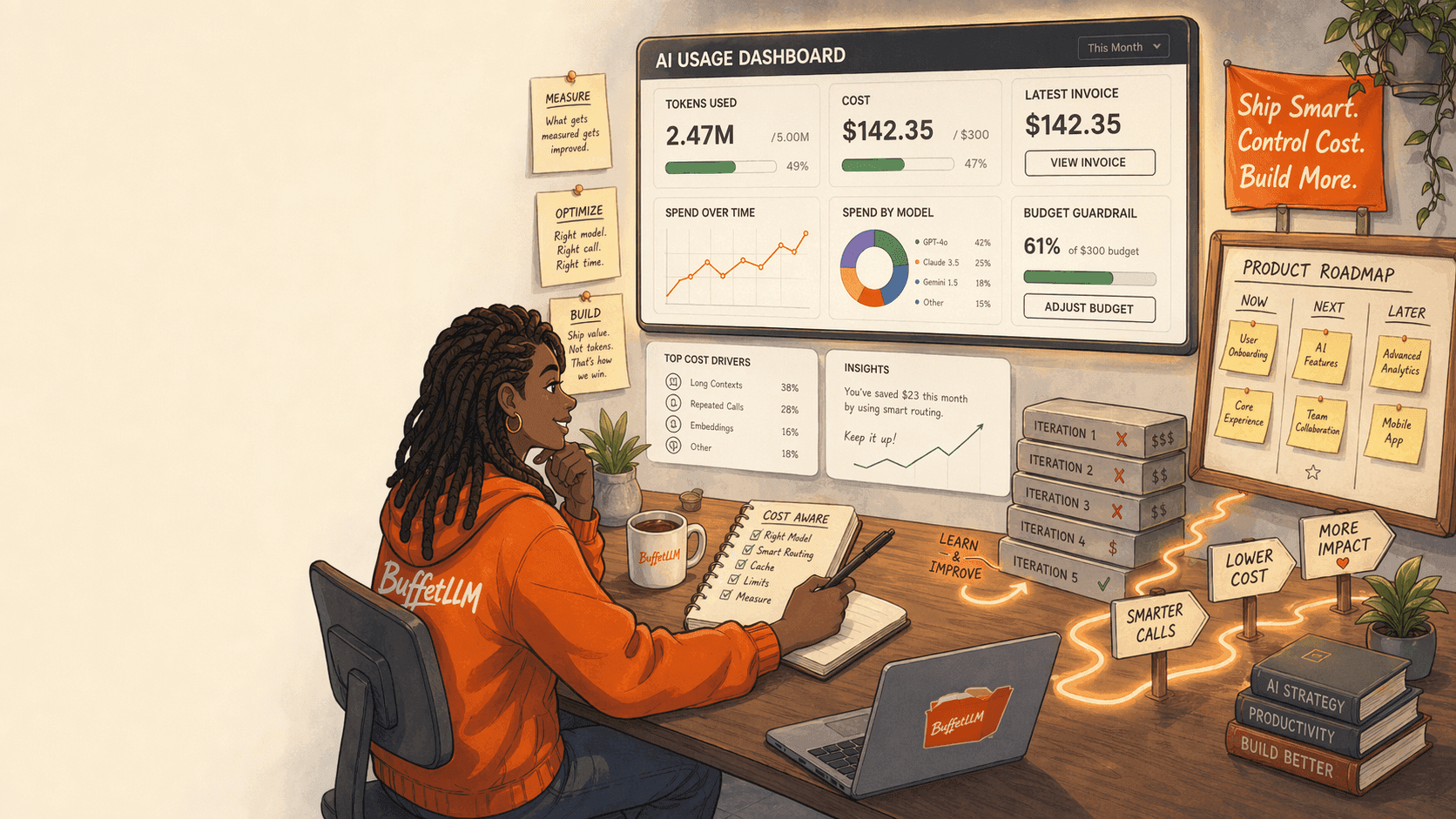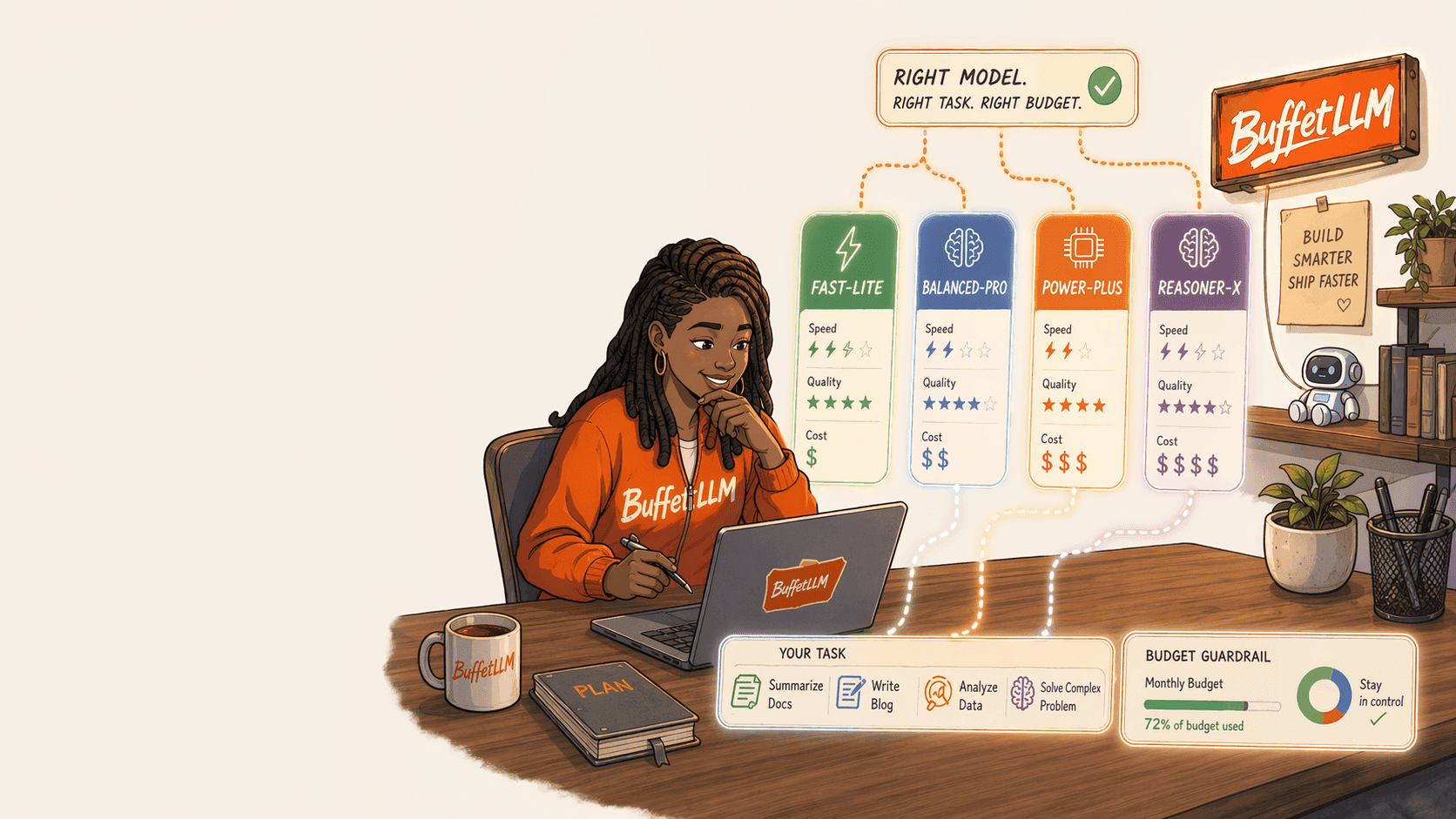

For a while, paying for multiple AI subscriptions looked like a sign of sophistication. One team had one account for writing, another for coding, another for research, and one more just in case a certain model happened to perform better on a specific task. It sounded reasonable.
Today, for many small teams, that is no longer an advantage. It is a leak.
A leak of money, context, focus, and speed.
The problem is not paying multiple times
The problem is everything that comes with it.
When a small team spreads its work across several disconnected tools, it takes on invisible costs that rarely show up on the monthly invoice:
- Everyone works a little differently
- Knowledge does not spread cleanly
- Model comparisons are weak or never happen
- Context gets lost between tools
- Habits form around convenience, not efficiency
The sum of all that is often more expensive than the subscriptions themselves.
What this looks like in practice
A lean team often ends up doing something like this:
- One tool for writing
- Another for coding
- Another for quick tasks
- Another because someone heard it was better for a certain use case
In theory, that gives you flexibility. In practice, it often creates fragmentation.
Each tool has:
- Its own limits
- Its own interface
- Its own history
- Its own usage logic
That turns something that should speed up the work into a small layer of daily chaos.
The hidden cost of fragmentation
There are four costs that usually go unnoticed.
1.Switching cost
Changing tabs looks free. It is not.
Every time you switch tools, you:
- Rebuild context
- Rewrite instructions
- Recover the thread
- Adjust expectations to how that model behaves
That adds cognitive friction. And cognitive friction kills iteration.
2.Duplication cost
Teams often pay for several overlapping capabilities.
Not because they truly need them, but because nobody designed a clear way to decide which tool should handle which task.
3.Governance cost
Even for small teams, these questions matter:
- Who has access to what
- Which tools are being paid for
- Which ones are actually used
- Which renewals still make sense
The more separate subscriptions you have, the harder it is to see the full picture.
4.Opportunity cost
This is the most important one.
When using multiple models comes with too much friction, the team stops comparing. And when the team stops comparing, it makes worse decisions.
Not because people are less capable. Because the setup punishes curiosity.
But multiple models still make sense
Of course they do.
In fact, for many builders, being able to use several models is better than getting locked into one.
The key is not avoiding variety. The key is avoiding fragmentation.
You do not need fewer options. You need a better way to access them.
What small teams should actually look for
If you are a lean team, the answer should not be stacking more tools. It should be simplifying access to capability.
What makes sense is:
- Less friction when switching models
- Lower total cost to experiment
- More clarity on what to use for each task
- Less scattered context
That is what improves real productivity.
The "just in case" trap
Many subscriptions stay alive because of fear:
- "Just in case this model performs better"
- "Just in case we need a larger context window"
- "Just in case the other tool fails"
That can be a reasonable instinct in the beginning. But once it becomes permanent, the stack stops being a strength and turns into a patchwork.
Small teams need flow, not collections
Small teams win through learning speed.
Their advantage is not having more resources. It is being able to test, adjust, and move quickly. That is why they need infrastructure that supports flow, not a collection of silos.
When access to multiple models is expensive, scattered, or awkward, the team uses less judgment than it could.
How we think about this at BuffetLLM
BuffetLLM starts from one clear idea: builders and small teams should be able to access powerful models without turning that access into a clumsy system of limits, subscriptions, and unnecessary decisions.
The real question should not be how many tools you pay for. It should be how much better they help you build.
Closing thought
Paying for multiple AI subscriptions can look like flexibility, but for many small teams it now means the opposite: more cost, more friction, and less clarity.
What matters is not collecting tools. What matters is being able to use the right model at the right moment without breaking your flow.
If that is how you want to work too, join the BuffetLLM waitlist and keep building without watching the meter every step of the way.